The world of business is changing faster than ever. Automation, robotics, and digital transformation are changing what it means to be “skilled” in technical jobs. But at the same time, there aren’t enough trained workers in many fields, including welders, machinists, maintenance technicians, and assembly operators.
Training in the past can’t keep up. It takes a long time, costs a lot, isn’t always reliable, and can be dangerous. Businesses need a better way to quickly and safely teach their workers new skills. That’s where VR (Virtual Reality) comes in.
VR is becoming one of the most powerful tools for speeding up skill development across the industrial workforce at XRINK. It helps new workers get ready for work faster and lets experienced technicians improve their skills with less downtime.
The Gap in Industrial Skills
The skill gap today isn’t just a problem with hiring people; it’s a crisis for productivity. Manufacturers say they have thousands of jobs open because workers don’t have the technical skills needed in modern factories. Aerospace, automotive, energy, and heavy engineering are some of the industries that are most affected.
There are a number of reasons why this gap is getting bigger:
- An ageing workforce and quick retirements
- Fewer young people are going into trades
- More complicated industrial processes
- Not enough training materials available
- Risks to safety during hands-on learning
What happened? Longer onboarding times, inconsistent performance, and a higher risk of operational problems.
Companies can’t afford to wait months for new hires to start working. They need training that is quick, dependable, and can grow with them, and VR is the perfect tool for that.
Why VR Helps You Learn Faster
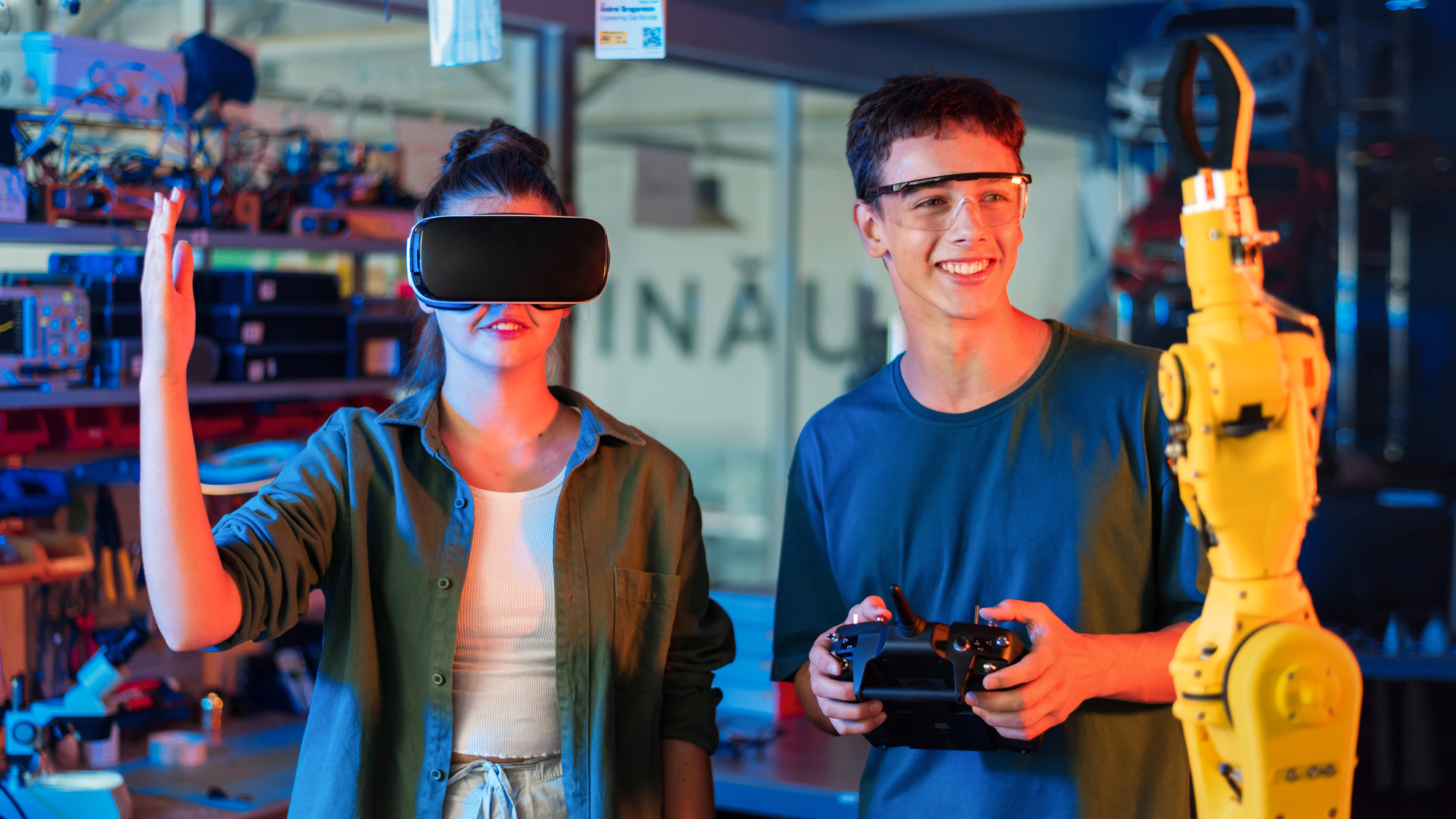
VR speeds up learning by changing the way people learn new skills. Instead of reading manuals or watching teachers, workers learn how to do technical tasks in fully immersive, interactive training environments that are just like the ones they will use on the job.
This is why VR training is so effective:
1. Learning by doing, but without the risk
VR lets trainees practise dangerous or hard tasks in a safe virtual world. Mistakes turn into chances to learn instead of accidents.
2. Repetition builds muscle memory
Trainees do the same tasks over and over again, like welding joints, putting together parts, and fixing machines, until the motions become second nature.
3. Everyone in the company is consistent
No matter where they are or who is teaching them, all trainees get the same high-quality, step-by-step instruction.
4. More involvement and memory retention
Immersive environments help people focus and feel more connected to situations, which can help them remember things up to 75% better than traditional methods.
5. Faster onboarding
What used to take weeks to learn can now be learnt in days.
Companies that use XRINK’s industrial VR platform see real improvements in the skills, confidence, and readiness of their workers.
Welding, Machining, and Assembly: Examples of How to Use It
VR isn’t just for ideas. It’s useful, hands-on, and directly related to the basic skills that businesses need every day. This is how it changes technical jobs in the real world:
Welding
Traditional welding training needs consumables, space in a shop, and close supervision. VR gets rid of those limits.
In XRINK’s welding simulations, students learn:
- Angles and speeds of the torch
- Placement of beads
- Control of heat
- Getting ready for and finishing a joint
- Rules for safety
Their technique changes the environment in real time.
Machining
Mistakes made while machining can break expensive tools or machines. VR is a safer place to start.
The machining modules in XRINK simulate:
- Lathe and CNC work
- Choosing and lining up tools
- Adjustments to the feed rate and spindle
- Setting up and finishing the workpiece
- Fixing problems with the workflow
Before they touch real machines, workers can change settings and learn how machines work.
Putting Together (Assembly)
With XRINK assembly training, workers learn:
- Part order
- Control of torque
- How to fasten things
- Routing of wiring and harness
- Check the quality
You can practise and simulate complex assemblies over and over again.
Using Analytics to Measure Skill Gains
One of the best things about VR is that it lets you see how well someone is doing in great detail.
The analytics dashboard for XRINK keeps track of:
- How fast you can finish a task
- Correctness and exactness
- How many and what kinds of mistakes
- Correct use of tools
- Following the rules
- Trends in improvement over time
Managers who train can:
- Find out what your strengths and weaknesses are
- Make coaching personal
- Certify skills in an objective way
- Look at how well different teams do
- Compare new hires to workers who have been there for a while
Companies don’t just hope their workers are ready with VR; they know they are.
The Future: personalised Training with AI
Artificial Intelligence is already driving the next step in VR training.
VR with AI will:
1. Make training fit each student
The AI automatically changes the difficulty and number of times a trainee has to do something.
2. Know when skill gaps are likely to happen
The system lets trainers know which skills or workers need more help.
3. Use intelligence to make complicated situations happen
Machines breaking down, physics-driven parts, or AI coworkers in VR.
4. Make time to master even shorter
Training becomes shorter, smarter, and more personalised.
We believe that AI-driven VR training is the future of industrial learning at XRINK.
Last Thought: The Way People Train for Jobs in the Future Will Be Different
Technical jobs are getting harder. There is more pressure to train workers more quickly and effectively.
VR gives industries exactly what they need: immersive, safe, and affordable skill development.
Companies can change how they train their workers for welding, machining, assembly, maintenance, and more with XRINK’s VR skill development platform.
It’s not just a new tool; it’s a whole new way to learn.
It’s not only faster; it’s also smarter.
And it’s not just for the future; it’s what the new workforce needs right now.